


Best NMN Supplement: NAD⁺ vs NR vs NMN - What Actually Raises NAD⁺ Levels Best?
The science on NAD+ has been building since 1906. What changed in 2019 changed everything about how we should be approaching it.

Key Takeaways
→ NAD⁺ levels fall as you age. That decline is real, and it matters. The longevity space was right to target it, as this decline is a central focus of anti-aging research and interventions.
→ Taking NAD⁺ directly, as a supplement or an IV drip, runs into a problem: your body has to break it down before it can use it. Most of it never makes it inside your cells intact.
→ NR (nicotinamide riboside) was the first real improvement. It entered cells more easily, raised NAD⁺ levels in humans, and had solid clinical backing.
→ In 2019, scientists found something that changed the whole picture: a dedicated transporter built specifically for NMN. The body built its own front door for this molecule. It didn’t build one for NAD⁺ or NR.
→ NMN is one enzymatic step from NAD⁺. It has a dedicated uptake system. It has human peer-reviewed data. It is the most direct oral route to cellular NAD⁺ the science has identified.
NAD⁺ vs NR vs NMN: The key differences for cellular health
Three molecules. One goal. Here’s how they compare.
|
|
NAD⁺ Direct |
NR |
NMN |
|---|---|---|---|
|
What it is |
The end molecule cells use |
A vitamin B3 precursor |
The immediate precursor to NAD⁺ (Nicotinamide mononucleotide is a precursor to nicotinamide adenine dinucleotide, NAD⁺) |
|
Enters cells |
Poorly, too large |
Through nucleoside transporters |
Through dedicated Slc12a8 transporter |
|
Steps to NAD⁺ |
Must be broken down first |
2 enzymatic steps |
1 enzymatic step |
|
Dedicated transporter |
None identified |
None specific to NR |
Yes, Slc12a8 (discovered 2019) |
|
Human clinical data |
Limited, IV data disappointing |
Dozens of peer reviewed studies |
Growing, multiple RCTs and ongoing clinical trials are evaluating its safety and efficacy for anti-aging and metabolic health |
|
Best for |
Clinical/addiction settings only |
Reliable daily supplementation |
Most direct oral route to cellular NAD+ |
NAD+ (nicotinamide adenine dinucleotide) is essential for cellular energy production, supports DNA repair, and plays a key role in cellular repair functions. The benefits of NAD+ supplements may include boosting energy levels, supporting anti-aging, and improving cellular repair, though research is ongoing and evidence remains inconclusive. Both NMN (Nicotinamide mononucleotide) and NR (Nicotinamide riboside) are being studied for their potential in healthy aging, with current studies aiming to confirm their safety and efficacy.
1. The longevity space got something right
Let's start with what's true.
Your body runs on NAD+. Every single cell uses it to make energy, repair DNA, and keep your metabolism working. It is involved in hundreds of biological processes happening inside you right now.
And it declines with age. Measurably. Consistently. By middle age, NAD+ levels in many tissues are roughly half what they were in youth. This age-related decline is associated with cardiovascular risk factors, cognitive changes, and reduced cellular resilience, the hallmarks of aging that researchers have been trying to understand for decades. It is also linked to conditions like Alzheimer's, Parkinson's, and cardiovascular disease.
When scientists at Harvard and Washington University published landmark research in 2013 showing that restoring NAD+ in older mice reversed several markers of aging, the longevity world paid attention. The biology was compelling. The potential was real.
What followed was ten years of people trying to restore NAD+ from the outside. They tried it every way imaginable, capsules, IV drips, injections, liposomal formulas, nasal sprays. All of it aimed at the right target. The science just needed a little more time to show us the best path there.
Early research on NMN supplementation is promising. Many studies have been conducted in animals, and human research is building steadily.
2. 120 years of science, one missing piece in age related decline
NAD+ has one of the longest research histories in all of biochemistry. It was first identified in 1906 while studying yeast fermentation. Otto Warburg characterized its role in energy metabolism in the 1930s. By 1958, researchers had mapped the main pathway the body uses to naturally produce NAD+ from vitamin B3.
For most of the 20th century, NAD+ lived entirely within academic research. A coenzyme essential to life, studied in laboratories, largely unknown outside of biochemistry.
The shift happened in the early 2000s, when scientists started connecting NAD+ decline to aging in a meaningful way. Sirtuin enzymes, proteins linked to longevity, turned out to require NAD+ to function. When NAD+ falls, sirtuins go quiet. When you restore NAD+, they wake back up.
That connection lit a fire. By 2015, NAD+ supplements were on shelves. By 2018, TIME magazine was covering them. By 2020, IV clinics had opened in cities across the country. There was just one thing nobody had fully mapped yet: the specific molecular front door. That piece did not arrive until 2019.
Nicotinic acid, another form of vitamin B3, has also been used as a supplement but is associated with side effects such as flushing and liver toxicity, especially at high doses. In contrast, nicotinamide mononucleotide (NMN) is a naturally occurring molecule known for its purported anti-aging and cognition-boosting properties.
The National Institute on Aging’s Interventions Testing Program is considered the gold standard for aging research. Alongside this, there is growing interest in NAD+ precursors like NMN and NR as supplements for longevity and healthy aging.
NAD+ Supplement Timeline: When things hit the market
|
YEAR |
WHAT ENTERED THE MARKET |
WHAT IT PROMISED |
|---|---|---|
|
2013 |
NAD+ Direct (oral capsules) |
Give your cells the molecule they’re missing |
|
2014 |
IV NAD+ Clinics |
Bypass digestion entirely, 100% bioavailability |
|
2015 |
NR Supplements (Tru Niagen) |
Smaller molecule, enters cells more easily |
|
2016 |
Subcutaneous NAD+ Injections |
Faster than IV, more convenient |
|
2019 |
NMN Supplements go mainstream |
The most efficient route to higher NAD⁺ |
In ten years, the market moved through four different approaches trying to solve the same problem. Each one got closer. The science caught up in 2019, the same year NMN went mainstream.
3. The three ways people tried to fix it
Once the scientific community understood that declining NAD+ contributed to age-related decline, three main approaches emerged for restoring it. Each one represented an improvement on what came before.
Taking NAD+ directly. The most obvious idea, just take the molecule directly. Pills, powders, IV infusions, subcutaneous injections. The appeal was straightforward: skip the middleman.
Taking NR. A smaller, simpler molecule that enters through known transporters and converts to NAD+ in a few steps. Backed by real clinical data. This became the dominant supplement approach through much of the 2010s.
Taking NMN. NMN sits one step away from NAD+ in the production pathway. In 2019, researchers confirmed the body has a dedicated transport system built specifically to absorb it. NR and other NAD+ precursors all convert into NMN first before the body can use them.
Many NAD+ supplements also include other nutrients, such as vitamins or herbal extracts, which may influence their effectiveness and safety.
Each approach moved the science closer to working with human biology.
4. Why taking NAD+ directly hits a wall for energy production
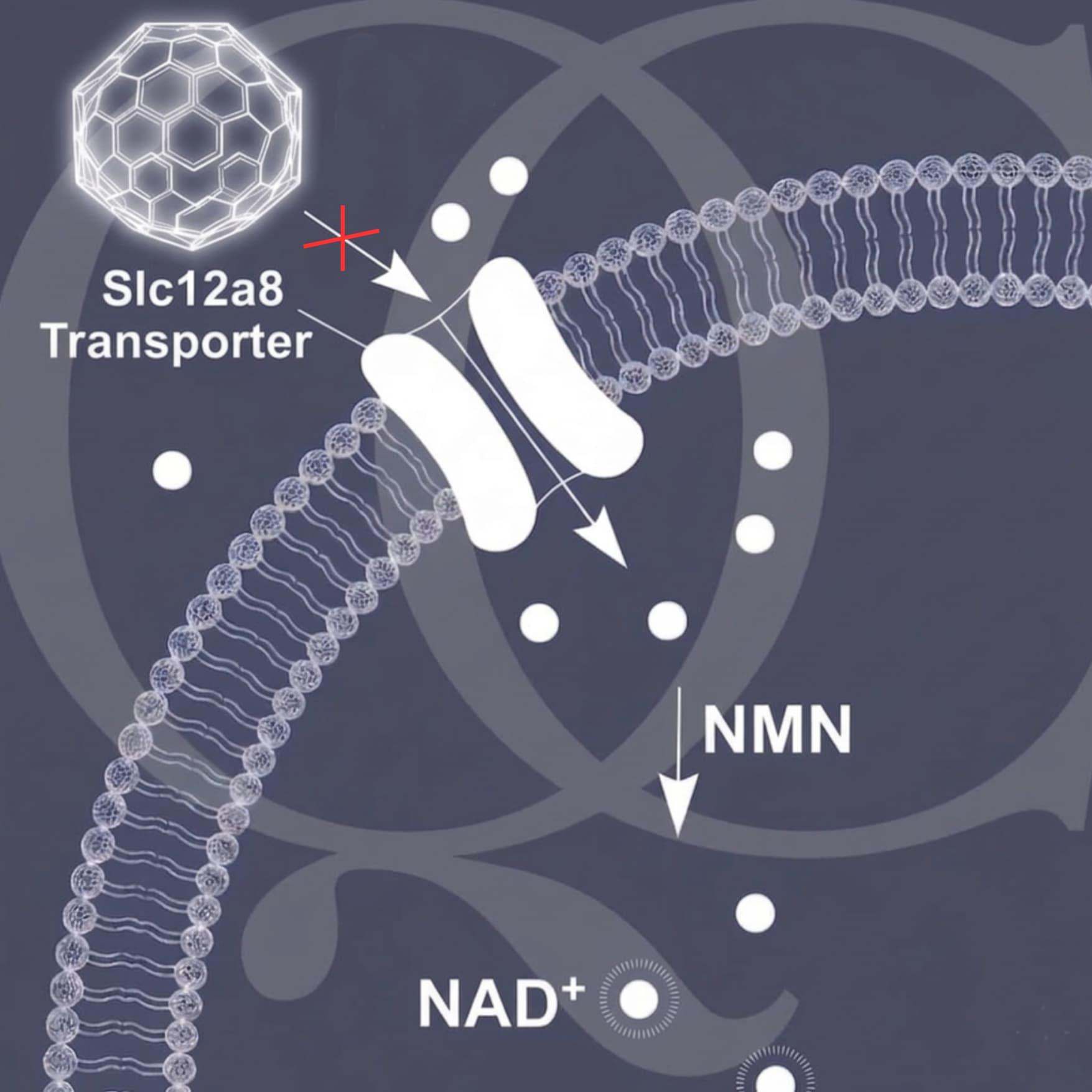
NAD+ is a big molecule. More than twice the size of NMN. It carries two negatively charged groups that make it difficult to cross cell membranes passively.
When you swallow NAD+, your digestive system gets to work immediately. Enzymes in the gut break it down, first into NMN, then into smaller fragments, before much of it can be absorbed intact. Multiple studies have confirmed that oral NAD+ cannot effectively increase NAD+ levels in plasma or tissues directly. It is broken down before it reaches the bloodstream.
The IV route was supposed to solve this by skipping the gut entirely. One hundred percent bioavailability. Problem solved.
Except the cellular entry problem does not disappear just because you are in the bloodstream. The same membrane barriers that prevent passive gut absorption exist throughout your biology. Getting NAD+ into the blood is not the same as getting it where it needs to go.
A clinical study comparing IV NAD+ to IV NR found that NAD+ IV raised whole blood NAD+ by only 2% at 24 hours. Every single participant reported moderate to severe side effects. The NR group completed the infusion 75% faster.
2% whole blood NAD+ elevation. Significant discomfort. Sessions lasting hours. Premium prices. That is the gap between a logical premise and a biology that does not fully cooperate.
5. NR: The first good answer
In 2004, biochemist Charles Brenner at Dartmouth discovered that nicotinamide riboside, NR, was a naturally occurring form of vitamin B3 found in milk, and the human body had a specific pathway to convert it to NAD+.
NR was smaller and simpler than NAD+. It entered through established transporters and did not require the breakdown steps that made direct NAD+ so inefficient.
The first human clinical trial in 2016 confirmed it: NR was safe, orally bioavailable, and raised NAD+ levels in humans. 100mg daily produced a 22% increase in whole blood NAD+ after two weeks. 1,000mg daily raised levels by 142%. Dozens of peer-reviewed clinical studies have since followed, covering brain health, cardiovascular markers, mitochondrial function, and metabolic health.
In Parkinson's disease research, oral NR supplementation was shown to raise cerebral NAD+ levels, the first time any oral supplement demonstrated it could boost NAD+ inside the human brain.
NR earned its place in this story. It moved the field forward significantly. It has a genuine safety record at doses up to 3,000mg per day. If the timeline had stopped in 2018, NR would be the clear answer.
It did not stop in 2018. For the full story of how NR got here and what changed, read our deep dive into the $100 million molecule battle.
6. The 2019 discovery that changed everything
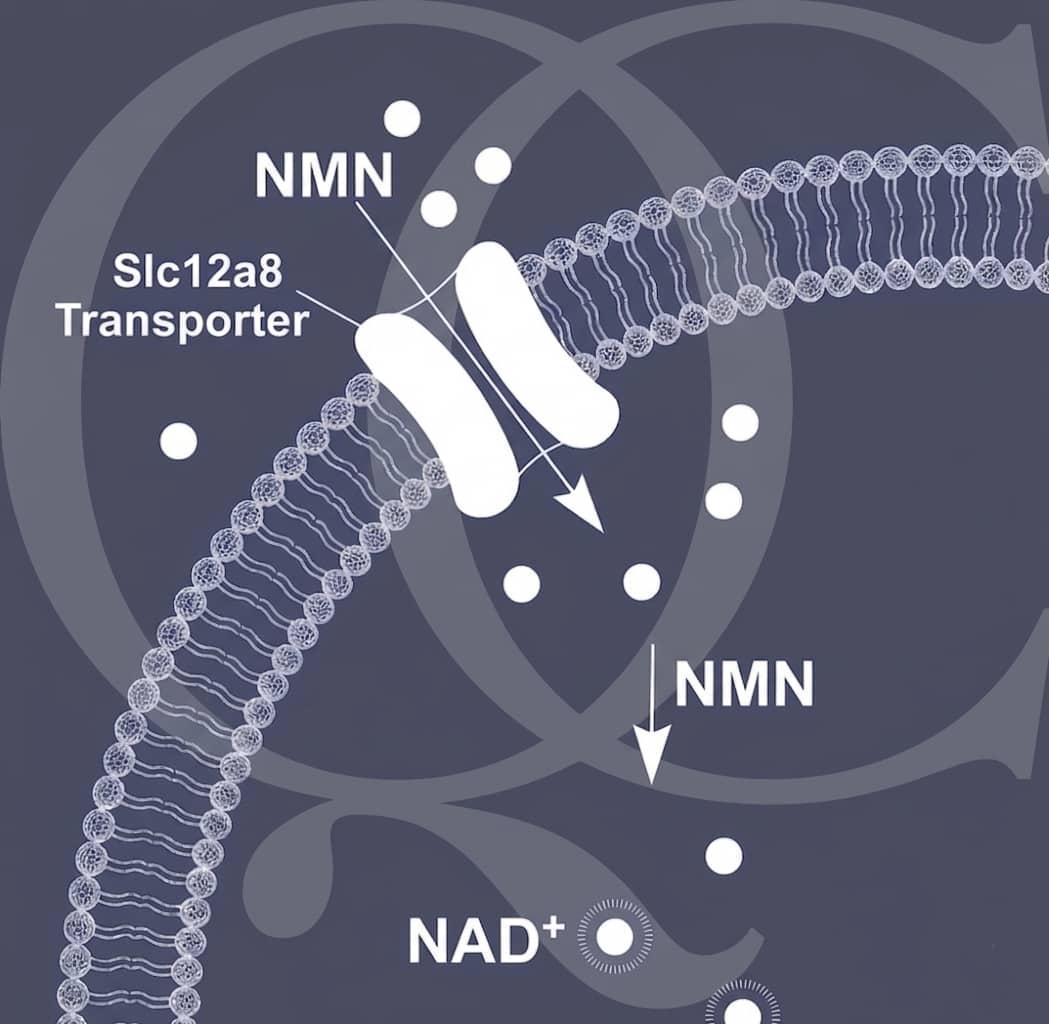
For years, scientists assumed NMN had to be converted to NR outside cells before it could enter. That meant NMN and NR were essentially doing the same thing, just reaching the same destination from slightly different starting points.
Then, in January 2019, a paper in Nature Metabolism identified something that had never been found before: a dedicated transporter built specifically for NMN.
The gene is called Slc12a8. What it encodes is a protein that sits in the membrane of intestinal cells and does one job, recognize NMN and move it directly into the cell as intact NMN. No conversion first. No intermediate step. NMN goes in as itself and converts to NAD+ inside the cell in a single enzymatic reaction.
This was the first NMN transporter ever discovered. And what came next was even more interesting.
Slc12a8 is expressed at levels roughly 100 times higher in the small intestine than in most other tissues, exactly where oral absorption matters most. It is upregulated when NAD+ levels fall. The body responds to NAD+ depletion by increasing its capacity to absorb NMN. It built a feedback mechanism around this molecule.
This is not a minor detail. It is the body telling us something through its own architecture. Of all the molecules available as NAD+ precursors, the one the body evolved a specific, regulated, high-capacity uptake system for is NMN.
The 2025 NAD World 3.0 framework, published by the Imai lab at Washington University, describes NMN and Slc12a8 as central to a multi-tissue signaling network between the gut, brain, muscle, and fat tissue. NMN is not just a precursor in this model. It functions as a systemic signal.
7. NMN supplements are one step away
Nicotinamide mononucleotide is a naturally occurring molecule found in small amounts in food and produced by the body as part of the NAD+ salvage pathway. It is the immediate precursor, one enzymatic step from NAD+.
Here is how the pathway works:
Nicotinamide → NMN → NAD+
NMN is the last stop before NAD+. One enzyme. One step. When you take NMN, it enters through the Slc12a8 transporter, arrives inside the cell, and a single enzyme called NMNAT converts it to NAD+.
Taking NAD+ directly means the body breaks it down, absorbs the fragments, and tries to reconstruct it inside cells. Taking NR means entering through nucleoside transporters, converting to NMN inside the cell, then converting NMN to NAD+, two steps, with meaningful conversion to nicotinamide in the gut along the way.
Taking NMN through Slc12a8 means arriving already as NMN, one step from the finish line, through a transporter specifically built and upregulated when NAD+ is needed most.
Human clinical trials in older adults have shown NMN raises NAD+ levels, improves insulin sensitivity in skeletal muscle, and increases exercise capacity in trained runners. A 2021 randomized trial showed 250mg of NMN per day improved muscle insulin sensitivity in postmenopausal women. A 2021 trial showed improvements in aerobic capacity in amateur runners. Multiple studies have confirmed NMN raises blood NAD+ levels consistently.
NMN supplementation supports energy metabolism, cellular energy production, and muscle health. By helping to boost energy levels, NMN may counteract the decline in NAD+ that occurs with age, supporting overall vitality. Research in healthy aging points to measurable effects on metabolic function, physical performance, and blood pressure markers. The potential benefits extend across multiple systems, which is consistent with NAD+’s role as a central regulator of cellular repair and energy levels.
What to know before you start
Human trials have used NMN at doses ranging from 250mg to 1,200mg per day. The 2021 Science trial was the first to show metabolic effects in humans at 250mg daily. The aerobic capacity trial used up to 1,200mg. Across these studies, NMN supplements were well tolerated at all tested doses with no serious adverse events reported. According to current literature, NMN is generally safe and well-tolerated in the short term, but more studies are needed to determine its safety over long periods of time. While NMN is generally considered safe to take in the short term, a larger body of research is necessary to determine its true effectiveness over time.
Most reported side effects are mild and transient. Some people experience abdominal pain, digestive discomfort, diarrhea, or mild upper respiratory symptoms, particularly at higher doses. These effects are generally short-lived. Side effects, toxicity, and safety concerns are more likely to occur when NMN or other NAD+ precursors are consumed in large quantities or high doses. If you are combining NMN with other supplements or medications, monitor your response and consult a healthcare provider.
Not all NMN products are equal. NMN is sensitive to light, heat, and moisture, which can cause it to degrade. Look for products with at least 99% purity, verified by independent third-party testing for heavy metals, microbial contaminants, and residual solvents. Opaque, UV-protected packaging and airtight seals matter for maintaining potency. cGMP-certified manufacturing and a published Certificate of Analysis are the baseline for a product worth trusting.
A balanced diet, regular exercise, and stress management remain foundational to healthy aging. NMN supplementation works alongside these, not instead of them.
The clinical research is still building. What the human trials show so far is consistent: NMN raises NAD+, is well tolerated at studied doses, and produces measurable effects on metabolic function and physical performance.
8. Science has a clear winner

This is not a story about failures. Direct NAD+ supplementation was a reasonable first hypothesis. NR was a genuine scientific advance with real human evidence behind it. The IV clinic approach tried to solve a real bioavailability problem.
The longevity space spent a decade asking the right question, how do we restore NAD+ from the outside? Each approach moved the science closer to working with human biology.
NMN is where the biology actually leads. It is the molecule immediately upstream of NAD+ in the body’s own production pathway. It has a dedicated intestinal transporter the body upregulates when it needs more NAD+. It has human clinical evidence showing measurable effects on metabolic function and physical performance. It enters through a transporter built for it and converts in one step.
The space got the target right from the beginning. The science has now found the most direct route to it.
Long-term safety and efficacy of NAD⁺ boosters
As interest in NAD⁺ boosters like nicotinamide mononucleotide (NMN) and nicotinamide riboside (NR) continues to grow, understanding their long-term safety and efficacy is essential for anyone considering these supplements as part of a healthy aging strategy. While early research and initial clinical trials suggest that NMN supplements may offer metabolic benefits, such as improved insulin sensitivity, enhanced energy metabolism, and support for cardiovascular health, the full picture is still emerging.
NAD⁺ is fundamental to energy production, DNA repair, and maintaining optimal cellular function. As we age, NAD⁺ levels naturally decline, which can contribute to age-related decline, increased cardiovascular risk factors, and challenges in maintaining muscle health and mental health. Supplementing with NAD⁺ precursors like NMN and NR may help counteract this decline, potentially supporting energy levels, metabolic health, and the body’s ability to repair DNA at the cellular level.
However, while animal studies and early human trials are promising, comprehensive clinical research is still needed to confirm the long-term efficacy and safety of these supplements. Most human studies to date have been relatively short in duration and have focused on specific outcomes such as blood pressure, insulin sensitivity, and exercise capacity. The potential benefits for the cardiovascular system, muscle health, and mental health are exciting, but more robust clinical evidence is required to fully understand the impact of long-term supplementation.
It’s also important to consider potential risks and unintended consequences. Some individuals may experience mild side effects, such as abdominal pain or digestive discomfort, especially at higher doses. As with any new supplement, following recommended dosages and monitoring your body’s response is crucial. Older adults and those with underlying health conditions should consult with a healthcare professional before starting NMN or NR supplementation to ensure it aligns with their overall health goals.
Quality matters. Not all NMN supplements are created equal, and third-party testing is essential to verify purity, potency, and the absence of contaminants. Expert guidance can help you choose the right supplements and avoid products that do not meet rigorous quality standards.
Ultimately, NAD⁺ boosters should be viewed as one component of a holistic approach to healthy aging. Regular exercise, a balanced diet rich in whole grains, fruits, and vegetables, effective stress management, and adequate intake of essential nutrients and vitamins remain foundational for metabolic health and overall well-being. Supplements like NMN and NR may offer additional support, but they are not a substitute for a healthy lifestyle.
As the field of aging research advances, ongoing clinical trials will provide more clarity on the long-term benefits and potential risks of NAD⁺ supplementation. For now, staying informed, prioritizing quality, and working with healthcare professionals are the best ways to make evidence-based decisions about incorporating NAD⁺ boosters into your routine.
The bottom line
NAD+ decline is real and worth addressing. The question was always how, and after a decade of research, the biology has a clear answer. NMN enters through a dedicated, regulated transporter the body built specifically for it, converts to NAD+ in a single step, and has human clinical evidence to back the approach.
QUiET COYOTE Pure Crystalline NMN → One ingredient. One step from NAD⁺.
Pharmaceutical-grade. quietcoyote.com | Shop the Science
Studies Referenced
These statements have not been evaluated by the FDA. These products are not intended to diagnose, treat, cure, or prevent any disease.