


NAD IV Therapy: Why NAD⁺ IV clinics are a thing of the past
"It's completely idiotic from a biochemistry point of view." - Says a top European physician on NAD⁺ IV therapy. Here is why the science backs him up.

Why oral NMN outperforms IV NAD therapy at a fraction of the cost
Dr. Stefan Sagner is a physician and the director of the European Society of Preventive Medicine. He studies NAD⁺ for a living. This is what he thinks of NAD⁺ IV therapy.
“There is little evidence that NAD⁺ infused into the bloodstream actually enters cells where it is needed. It’s completely idiotic from a biochemistry point of view to inject yourself with NAD itself.”
Dr. Eric Verdin runs the Buck Institute for Research on Aging, the world’s first research center built solely to understand why we age. He has published over 270 scientific papers on NAD⁺, sirtuins, and the biology of aging. He trained at Harvard Medical School and is a professor of medicine at the University of California, San Francisco. He has spent three decades studying this molecule.
His position is equally direct.
“My opinion is that NAD⁺ intravenously is not something that should be done. NAD⁺ is too big to enter cells and is mostly broken down into nicotinamide when injected.”
NAD nicotinamide adenine dinucleotide, the molecule at the center of all of this, is a vital coenzyme involved in cellular energy production, DNA repair, and age-related decline. These are the scientists who built the research foundation that the NAD⁺ IV therapy industry is now selling back to you at $700 a session.
What you should know before you book that appointment
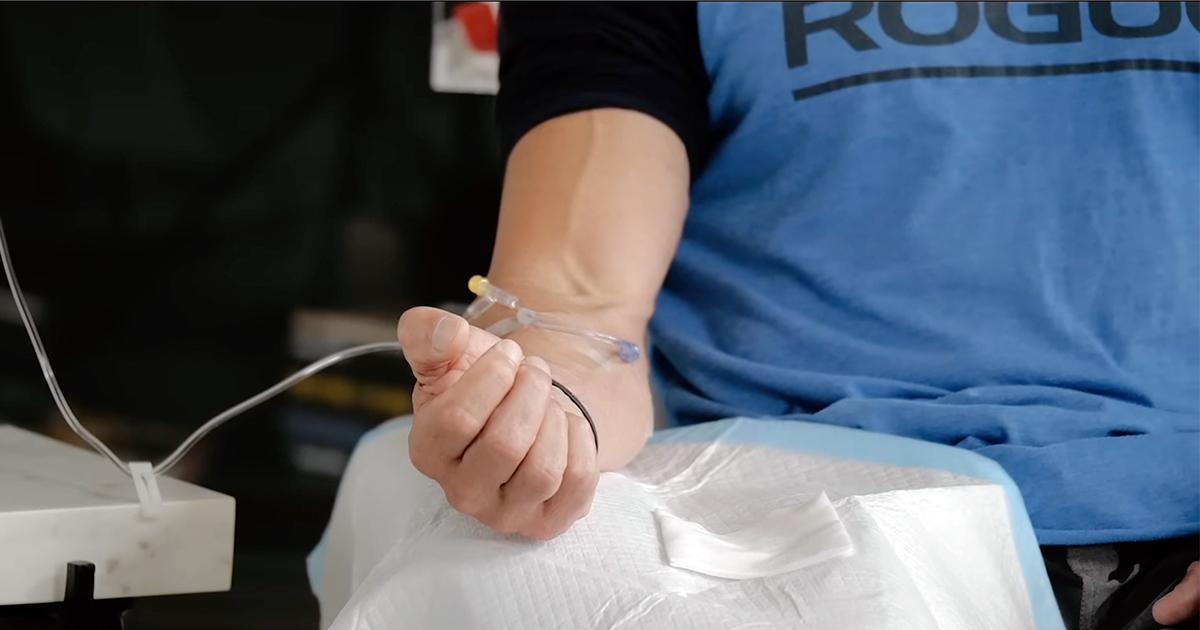
No clinic will tell you that the molecule cannot get inside. No clinic will explain that the 538% spike in urine excretion means you just flushed most of what you paid for. They will talk about bioavailability, cellular rejuvenation, and peak performance. They will show you a comfortable chair and a professional-looking IV setup. They will charge you $700 and recommend you come back five more times.
The science says something different. And the scientists who built that science are taking oral NMN, not IV drips.
You are about to spend $2,000 to $6,000 on a molecule that cannot reach where it needs to go. That is the NAD IV therapy business model in one sentence. Everything else is marketing.
Here is the part no IV clinic will tell you. Nicotinamide adenine dinucleotide, the molecule at the center of all of this, has to be broken down into smaller pieces before it can be used. Only after those pieces get inside a cell can it be rebuilt. The finished molecule you paid for never makes it inside. It goes into your blood, gets taken apart by surface enzymes, and then your kidneys flush most of it out.
Under normal conditions, NAD⁺ sits outside at very small concentrations. Inside, concentrations run about 500 times higher. When it suddenly spikes in the bloodstream at levels that never occur naturally, your immune system reads it as a danger signal. The same signal sent out when injured or dying tissue spills its contents into the blood.
Your body treats a sudden flood of NAD⁺ in the bloodstream like a wound.
What Is NAD⁺ and Why Does It Matter So Much?
The molecule life cannot exist without
NAD⁺, which stands for nicotinamide adenine dinucleotide, is found in every living cell in your body. Without it, nothing works.
NAD⁺ runs energy production in your mitochondria, turning the food you eat into ATP, the fuel your mitochondria run on. It is one of the most important anti-aging molecules ever studied. It supports cellular energy production across hundreds of reactions. It handles DNA repair and cellular stress response. It powers seven proteins called sirtuins that govern longevity, inflammation, and cellular repair. Sirtuins are your body's longevity regulators, the proteins most directly linked to healthy aging. They only switch on when NAD⁺ levels are high enough to fuel them.
As Dr. Verdin has explained publicly, NAD⁺ is a central biological switch. When levels are high, during youth, hard exercise, or fasting, sirtuins stay active, cellular functions work properly, and stress gets managed well. When levels drop, that whole system starts to break down.
Why levels decline as you get older

The decline is real and well-documented. NAD⁺ depletion is now considered one of the primary drivers of biological aging. Levels start dropping around age 25 and can fall by 50 to 60% by the time you hit your 40s. This aging process accelerates at the cellular level long before you feel it. That drop tracks directly with fatigue, brain fog, cognitive decline, and slower recovery. Low levels are tied to poor mitochondrial function, weakened cellular health, metabolic disorders, skin health problems, accelerated skin aging, and a growing list of age-related conditions.
So when someone tells you NAD drips can fix all of this, the pitch makes sense on the surface. You want to boost energy levels, sharpen cognitive function, support brain health, and turn back the clock. A healthcare provider puts it straight into your bloodstream through an IV infusion. Mental clarity restored. Chronic fatigue gone. Anti-aging benefits unlocked. Peak performance back.
The logic is sound. The execution is where it falls apart completely.
What Your Body Does With IV NAD⁺
They Watched for Six Hours. The Molecule Never Made It.
Researchers measured this in real time. In a landmark study published in Frontiers in Aging Neuroscience, participants received a full 6-hour NAD infusion while scientists tracked blood and urine the whole time. A six-hour NAD infusion, administered by licensed clinicians, directly into a vein.
For the first two hours: nothing. Zero change in plasma NAD⁺ or any metabolites at all. It was breaking it apart faster than it could build up in the blood.
By hour six, two breakdown products showed up together in the blood: nicotinamide and ADP-ribose. Those are the leftover pieces from CD38 enzymes chopping the molecule apart. The NAD was not being absorbed. It was being dismantled and the pieces discarded.
The Study Found a 538% Spike. In Urine.
The most damning finding in the study: urine NAD⁺ excretion went up 538% during the treatment. NAD⁺ was not entering cells. It was leaving the body. Not absorbed. Not used. Flushed out. Broken down in the bloodstream, then excreted by the kidneys.
A 2024 randomized placebo-controlled trial by Hawkins and colleagues confirmed the same pattern. Several infusions of IV NAD⁺ did not raise whole blood NAD⁺ in a meaningful way within 24 hours. The intracellular levels that run energy production, DNA repair, and sirtuin activation barely moved at all.
Several NAD infusions at $500 to $1,000 each are producing very expensive urine. Each session leaves patients with elevated urine excretion and barely changed intracellular levels.
Why NAD IV Therapy Might Be Making Things Worse
Your immune system reads it as a threat
Under normal healthy conditions, NAD⁺ in extracellular fluid exists at tiny amounts. That is how it should be. When it shows up at high concentrations in the bloodstream, your immune system reads that as a sign of cellular damage, because that is exactly what causes elevated extracellular NAD⁺ under natural conditions. Injured and dying tissue spills its contents into the blood, and NAD⁺ leaks out with it.
When you push high doses of NAD⁺ through a NAD infusion, you are mimicking that injury signal. The Hawkins 2024 trial confirmed this directly. White blood cell counts and neutrophils both went up in the NAD⁺ IV group. Clear markers of inflammation. The immune system was not welcoming the treatment. It was defending against it.
It Is Also Just Genuinely Painful
This is not a minor inconvenience. Patients receiving high dose NAD infusions commonly report severe nausea, intense muscle cramping, chest tightness, a racing heart, and a deep aching pressure that runs through the chest and abdomen. Some describe it as feeling like their body is being wrung out from the inside. The faster the infusion rate, the worse it gets. Clinics slow the drip to manage symptoms, which is why a single session stretches to four, six, sometimes eight hours.
Many clinics administer Zofran, the brand name for ondansetron, an anti-nausea medication typically used for chemotherapy patients, just to keep people from vomiting during the infusion. Read that again. The standard of care at NAD IV clinics includes a separate pharmaceutical intervention to manage the side effects of the primary treatment. You are paying $700 or more for an infusion that requires an additional drug just to make it tolerable.
The nausea is not random. It is the same inflammatory response described above, playing out in your gut. Your body is registering the NAD⁺ flood as a threat, and your digestive system is responding accordingly.
The potential side effects are not a coincidence
This is why the potential side effects of NAD IV therapy read like a list of immune reactions. Clinics manage these by slowing the infusion rate, but a slower drip does not fix the underlying problem. The 2026 Frontiers in Aging retrospective study found that every single patient in the NAD⁺ IV group had moderate to severe symptoms during their treatment. The precursor group had none.
Registered nurses adjust the infusion rate throughout the session. Healthcare providers watch vital signs the whole time. A nurse practitioner manages whatever symptoms come up. What they are managing, in many cases, is an inflammatory response to a molecule the immune system is treating as foreign.
Where That Leaves NMN
The molecule that skips the whole debate
NMN, or nicotinamide mononucleotide, sits exactly one step away from NAD⁺ in the salvage pathway. When NMN gets inside a cell, the body turns it into NAD⁺ fast. It is small enough to enter through specific membrane transporters that were built to carry it. It does not need to survive in the bloodstream as a finished molecule. It just needs to get inside, and it does.
When you take oral NMN, plasma levels rise within minutes. The liver's NAD⁺ levels start going up within 15 to 30 minutes. That is not theoretical. That is what the research shows happening in human tissue in real time, through the digestive system, with no IV required.
The bioavailability claim the clinics are using against you
Clinics will tell you that IV therapy gives you 100% bioavailability while oral supplements get broken down in the digestive system. That is technically true at the vascular level and completely wrong at the cellular level. What is in your blood and what is inside your tissue are two entirely different things. High blood levels of NAD⁺ mean nothing if the molecule cannot cross a cell membrane, and it cannot.
What the clinical trials on oral NMN show
The clinical evidence for oral NMN is strong and keeps growing. A 2024 randomized, placebo-controlled, double-blind trial in healthy older adults aged 65 to 75 found that 250mg of oral NMN daily for 12 weeks significantly raised blood NAD⁺ and its metabolites. People in the NMN group walked faster and slept better than the placebo group.
A January 2024 trial in healthy middle-aged Japanese men confirmed that oral NMN consistently increased NAD⁺ biosynthesis in blood over eight weeks with no health problems.
A 2024 meta-analysis that pulled data from nine studies covering 412 people found that NMN improved muscle mass, liver enzyme levels, and insulin resistance in middle-aged and older adults.
The Real Cost of NAD IV Therapy

What you spend
A single NAD infusion session runs $400 to $1,000 at most US clinics. High dose sessions push toward $1,500. Mobile services that come to you often go over $1,000. There are no FDA approved claims attached to any of it. That FDA approved status you might expect from a medical treatment does not exist here. Clinics can say almost anything they want without having to prove it.
No clinic recommends just one NAD infusion. The standard approach is a loading phase of four to six NAD infusions over a short period, frequent treatments the clinic presents as essential for results, followed by monthly or bi-monthly maintenance. That loading phase alone runs $1,500 to $6,000 out of pocket. A full year of maintenance adds another $6,000 or so. Insurance covers none of it.
Compare that to oral NMN supplements, which are backed by more clinical evidence than the NAD infusion protocol they are supposed to replace.
The industry is already cracking
A comprehensive market analysis published in NutraIngredients in October 2025 found that people are getting smarter about the NAD infusion industry. They are asking for clinical evidence. They are not finding it. Amazon search data for NAD products dropped 80% between late 2024 and mid-2025 as consumers started doing the math between what the industry promises and what the research shows.
The correction is already underway.
Does NAD IV Therapy Do Anything at All?
Sometimes, Maybe.
In some cases, something may be happening. When NAD breaks down in the blood, it leaves smaller pieces behind. Those pieces can get into tissue and contribute indirectly. So the body may get some benefit. Just not from what went into the vein. From the leftover pieces. The IV is basically a delivery vehicle for scraps that your body then has to rebuild from scratch.
Where IV NAD therapy has a real track record
There is a clinical history worth acknowledging. NAD IV therapy has been used in addiction recovery since the 1960s. A 2022 study of 50 patients receiving NAD treatment found NAD IV therapy helps reduce withdrawal symptoms and cravings for substances like alcohol and opioids.
These are real results in real patients under close medical supervision with healthcare provider oversight.
They are not the anti-aging, energy boost, peak performance pitch being sold to healthy people at wellness clinics.
A 2023 systematic review in the journal Nutrients found no solid clinical evidence that IV NAD⁺ improves fatigue or energy levels in healthy adults. The potential benefits of NAD IV infusions for general wellness have not shown up in peer-reviewed literature, despite years of marketing claiming otherwise.
What Raises NAD Levels That Last
Why the IV approach misses the point entirely
NAD levels fall with age for several reasons that build on each other. CD38 is an enzyme on immune cells that becomes more active as you age and eats up NAD⁺ fast. Research by Eduardo Chini and colleagues showed that blocking CD38 in animal models stopped NAD⁺ decline completely. NAMPT, the enzyme that makes NMN inside muscle and liver tissue, slows down over time. Chronic inflammation, metabolic disorders, poor sleep, and cellular stress all speed up the decline and create real health issues over time.
Raising NAD levels in a way that lasts means working with those systems, not pouring a finished molecule into the bloodstream and hoping it finds its way to the right place.
The approaches that work
Oral NMN supplementation feeds the salvage pathway directly. Exercise raises NAD⁺ by increasing energy demand and pushing your mitochondria to produce more, giving you a real energy boost without a needle. Intermittent fasting turns on sirtuins through caloric restriction pathways that drive NAD levels up naturally. Good sleep protects the daily cycle of enzymes that make and recycle NAD⁺ around the clock.
These are not backup options for people who cannot afford IV treatments. They are the tools the research supports for boosting NAD levels in a lasting way that improves cellular health and well-being.
High purity oral NMN is where the anti-aging science consistently points. The benefits of precursor supplementation, including higher intracellular levels, better energy metabolism, stronger cellular energy production, support for brain health, skin health, cognitive function, and healthy aging, are documented in peer-reviewed human trials. The potential benefits of IV infusions in healthy people remain unproven by that same standard.
Vitamins and amino acids given by IV have a real place in clinical nutrition. NAD IV therapy does not belong in that conversation, because the core molecule cannot cross a cell membrane.
NAD⁺ Injections vs. Oral NMN: What the Science Shows
The problem shared by every injection method
NAD⁺ injections, whether subcutaneous, intramuscular, or intravenous, all share the same core problem. The molecule cannot get inside intact. It breaks down extracellularly, a portion gets flushed through urine, and at high doses it may trigger a cellular injury response. Many patients who try NAD injections and feel nothing afterward are not imagining the absence of results. The molecule never reached the intracellular NAD pools it was supposed to fill. The benefits of NAD supplementation they were promised require NAD⁺ to be inside tissue, where it can activate sirtuins, run DNA repair, support energy production, and address the health issues that sent them to the clinic in the first place.
Why oral NMN works differently
Oral NMN works through a completely different process. It enters living cells through membrane transporters built to carry it. Once inside, the body turns it into NAD⁺ in the mitochondria, the nucleus, and the enzyme systems that run energy and cellular repair. Cellular health improves because intracellular levels go up. Cellular health improves because intracellular levels go up. Cells are better equipped to maintain and restore normal function. Energy production increases. Metabolism improves.
Boosting NAD levels through oral NMN takes weeks rather than hours. But those elevated levels are inside cells doing real enzymatic work. The NAD⁺ that builds up through that process is inside doing real work. That is the difference between a number on a lab report and something you can feel.
The Bottom Line
NAD⁺ IV therapy is built on something real. NAD⁺ matters enormously for healthy aging and human health. Its decline with age is well-documented and tied to nearly every marker of biological decline the research community has studied. The desire to restore it makes complete biological sense.
The delivery method is simply wrong, and has been from the start.
NAD⁺ cannot cross the cell membrane. It breaks down in the bloodstream, gets flushed out through urine, and at high doses sets off a stress response the immune system reads as cellular damage. The intracellular levels that run energy production, cellular repair, mitochondrial function, brain health, skin health, cognitive function, and longevity do not meaningfully go up from NAD IV infusions. The head-to-head clinical evidence confirms this. The pharmacokinetic research confirms this. The top longevity researchers in the world confirm this.
Oral NMN gets where NAD⁺ IV therapy cannot reach. It is backed by clinical evidence from multiple peer-reviewed human trials. It supports cellular health, cognitive function, energy metabolism, anti-aging processes, and long-term health through processes the body was built to use.
NAD IV therapy is a great business.
However, patient safety should always be the top priority. Patients should consult their healthcare provider before starting NAD+ IV therapy to discuss personal risks.
It is just not great biochemistry.
The clinics know the science is catching up to them. It already has.
References
Verdin E. Clinical Evidence for Targeting NAD Therapeutically. Pharmaceuticals. 2020.
NAD market analysis: From hype to reality check. NutraIngredients-USA. 2025.
These statements have not been evaluated by the FDA. These products are not intended to diagnose, treat, cure, or prevent any disease.