


NMN vs NR: The $100 Million Molecule Battle
In 2019, researchers found a dedicated transporter built specifically for NMN. That single discovery changed the entire NAD+ conversation. Here is the full story.

Two molecules. One goal: raise NAD⁺.
Nicotinamide adenine dinucleotide, NAD⁺, is the coenzyme your cells use to produce energy, repair DNA, and regulate the biological processes that slow down with age. By your 50s, NAD⁺ levels have dropped by roughly half compared to your 20s. Both NMN and NR are NAD⁺ precursors that raise those levels. Both have real clinical evidence behind them. The question is not whether either works. The question is which one works more directly.
The answer is in the biology. And to understand it, you need to know the story of a company in Los Angeles that spent twenty-five years, tens of millions of dollars, and considerable legal energy betting everything on a single molecule, and how the science quietly moved past them.
That molecule is nicotinamide riboside. You probably know it as NR. You may have taken it. You may be taking it right now.
Nobody is the villain here. The science just kept moving.
How ChromaDex Built the First Commercial NR Business
In 1999, a chemist named Frank Jaksch founded ChromaDex in Irvine, California. The original business was unglamorous, reference standards, analytical testing, supplying ingredients to other companies in the supplement industry. The kind of company that exists behind the scenes of every product on a supplement shelf, invisible to consumers.
Five years later, a biochemist at Dartmouth named Charles Brenner made a discovery that would eventually change everything for ChromaDex. Brenner identified that nicotinamide riboside, a form of vitamin B3 found naturally in trace amounts in milk, was a precursor the human body could convert into NAD⁺. Dartmouth filed patents on the discovery, funded in part by the National Cancer Institute.
For several years, Brenner's finding lived in academic journals. ChromaDex was still a testing company. The two threads had not yet connected.
How ChromaDex Locked Up the NR Patent and Funded the Science (2011)
In 2011, ChromaDex licensed a manufacturing patent from Cornell University for a cost-effective method to synthesize NR at commercial scale. In 2012, they licensed the Dartmouth patents exclusively. They now owned the commercial rights to Brenner's discovery. They brought Brenner in as Chief Scientific Advisor. He held equity. His molecule, their infrastructure.
In 2013, ChromaDex launched Niagen, the world's first commercial NR supplement. They began supplying it as an ingredient to other supplement companies who could white-label it under their own brands. In 2014, they licensed additional Dartmouth patents covering pharmaceutical uses of NR.
That same year, CEO Frank Jaksch made his position clear in a public statement: "Our ownership of these new patent rights creates a significant and meaningful barrier to entry for would-be competitors in the entire NAD⁺ precursor market."
The strategy was straightforward. Lock up the molecule. Fund the science. Build the brand. Let the clinical data do the marketing.
It was, by any measure, a well-executed plan.

The First Human Clinical Trial That Proved NR Raises NAD⁺ (2016)
In 2016, Brenner led the first placebo-controlled clinical trial of NR in humans, published in Nature Communications. The results were real. Nicotinamide riboside was safe. It was orally bioavailable. It raised NAD⁺ levels dose-dependently. 100mg produced a 22% increase in whole blood NAD⁺, and higher doses produced more. Tru Niagen launched as ChromaDex's consumer brand the same year, and revenue began climbing.
What followed was a decade of serious scientific investment. ChromaDex funded or supplied nicotinamide riboside for studies at more than 170 research institutions. Dozens of peer-reviewed clinical studies. Brain health. Cardiovascular markers. Mitochondrial gene expression. Skeletal muscle metabolic responses. The NADPARK study in 2022, a randomized placebo-controlled trial, showed oral NR could raise NAD+ levels inside the human brain, including mitochondrial NAD⁺, the first time any oral supplement had demonstrated that.
None of this was manufactured. The clinical record on chronic nicotinamide riboside supplementation is legitimate. Double-blind safety trials in healthy volunteers confirmed it was well-tolerated across healthy middle-aged and older adult populations.
By 2023, ChromaDex had invested over $35 million in NR research. They had regulatory approvals in the United States, the European Union, Canada, and Australia. Tru Niagen was the number one selling NAD⁺ supplement in the United States by revenue.
They had built exactly what they set out to build.
Why NR Requires Chemical Stabilization Just to Survive Manufacturing
Here is something most Tru Niagen customers do not know.
NR is an unstable molecule. In its free form, it is hygroscopic. It absorbs moisture from the air and degrades. It cannot survive manufacturing, shelf life, or the journey through your gut in its raw state. To exist as a commercial product, nicotinamide riboside has to be chemically stabilized. The solution is to bind it to a chloride ion, creating nicotinamide riboside chloride, NRCl. That is what is inside the capsule you are swallowing.
The chloride dissociates in your body and the NR is released. This is standard chemistry, and at the doses involved it is not a health concern. But it is worth pausing on. ChromaDex built a multi-hundred-million-dollar business around a molecule that needed chemical assistance just to hold itself together long enough to reach your gut.
And then, once it gets there, it still has two jobs to do before your body can use it.
Why NMN Reaches NAD⁺ in One Step While NR Requires Two (2019)
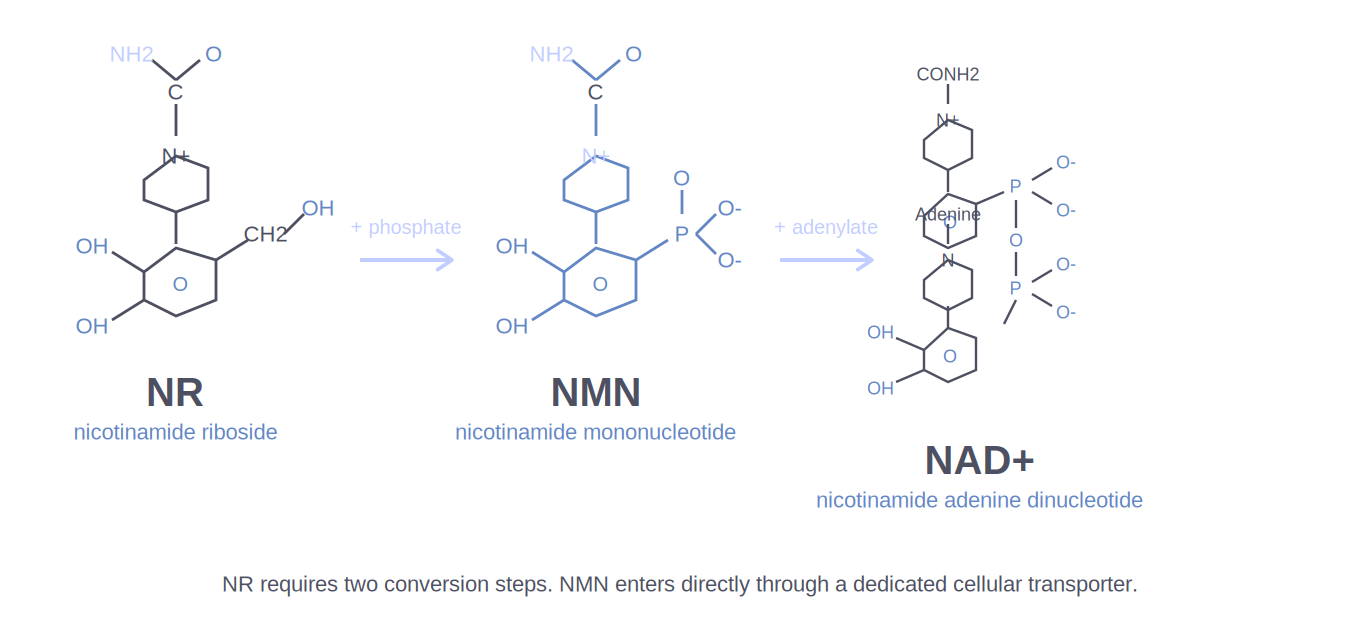
This is where the biology becomes relevant to your purchasing decision.
When NR enters your system, it doesn’t convert directly to NAD⁺. It first has to convert to NMN — nicotinamide mononucleotide — inside the cell. Then NMN converts to NAD⁺. Two enzymatic steps. Through general nucleoside transporters that NR shares with other compounds. No dedicated transport system. No biological preference. The rate-limiting enzyme in this recycling process is nicotinamide phosphoribosyltransferase, which operates on the nicotinamide produced along the way.
Research also shows meaningful conversion of NR to nicotinamide in the gut — a metabolite that doesn’t contribute to NAD metabolism as efficiently. Nicotinic acid mononucleotide and nicotinic acid represent separate entry points into NAD synthesis, but NR receives none of the preferential cellular handling that NMN does.
NMN, by contrast, is stable in pure crystalline form. No salt required. No stabilization chemistry. And in January 2019, a paper published in Nature Metabolism by researchers at Washington University identified something that changed the comparison entirely: a dedicated transporter built specifically for NMN.
Your body has a specific transporter that was built just for NMN. It sits in your small intestine and its only job is to grab NMN and pull it inside. The more your NAD⁺ drops, the harder this transporter works. Your body literally turns it up when it needs more NAD⁺. Nothing like this exists for NR.
The pathway, stated plainly:
NR → NMN → NAD⁺ (two steps, non-dedicated transporters, requires stabilization)
NMN → NAD⁺ (one step, dedicated regulated transporter, stable in pure form)
Not all NMN gets there equally. Pure Crystalline NMN is the only form that preserves the intact molecular structure the transporter is built to receive. Amorphous NMN — produced through cheaper synthetic routes — begins degrading before it reaches the cell. The pathway only works if the molecule survives the trip.
How ChromaDex Lost Its Core NR Patent in Federal Court (2023)
While the science was developing, ChromaDex was also fighting for its commercial life.
Elysium Health was a supplement company co-founded by MIT biologist Leonard Guarente. They had been buying NR from ChromaDex as an ingredient. In 2016, they stopped paying their bills and launched their own NR product called Basis. ChromaDex sued for breach of contract and patent infringement. Elysium counterclaimed, alleging ChromaDex had committed patent misuse.
What followed was one of the more remarkable legal disputes in supplement industry history. Over 500 filings across multiple federal courts in California, Delaware, and New York. Years of litigation. Millions in legal fees on both sides. ChromaDex won rounds. Elysium won rounds. The fight dragged on for nearly a decade.
Then in February 2023, the Federal Circuit Court of Appeals issued its ruling. ChromaDex's core patent on isolated NR, US Patent 8,197,807, licensed from Dartmouth, was invalid. The court's reasoning was precise: NR is a product of nature. It occurs naturally in milk. You cannot patent a product of nature simply by isolating it, regardless of how difficult or scientifically significant the isolation was.
The moat Frank Jaksch had spent a decade building appeared to be gone.
While the science was developing, ChromaDex was also fighting for its commercial life.
Elysium Health was a supplement company co-founded by MIT biologist Leonard Guarente. They had been buying NR from ChromaDex as an ingredient. In 2016, they stopped paying their bills and launched their own NR product called Basis. ChromaDex sued for breach of contract and patent infringement. Elysium counterclaimed, alleging ChromaDex had committed patent misuse.
What followed was one of the more remarkable legal disputes in supplement industry history. Over 500 filings across multiple federal courts in California, Delaware, and New York. Years of litigation. Millions in legal fees on both sides. ChromaDex won rounds. Elysium won rounds. The fight dragged on for nearly a decade.
Then in February 2023, the Federal Circuit Court of Appeals issued its ruling. ChromaDex’s core patent on isolated NR — US Patent 8,197,807, licensed from Dartmouth — was invalid. The court’s reasoning was precise: NR is a product of nature. It occurs naturally in milk. You cannot patent a product of nature simply by isolating it, regardless of how difficult or scientifically significant the isolation was.
The moat Frank Jaksch had spent a decade building was gone.
How Niagen Bioscience Rebuilt Its Patent Moat After Losing in Court
Here is where it gets genuinely interesting.
After the 2023 patent ruling, other companies entered the NR market freely. NR became a commodity. The original moat appeared gone.
It was not gone for long.
In March 2025, Niagen Bioscience, the company formerly known as ChromaDex, secured US Patent 12,252,506, a composition of matter patent covering NR salt forms including NR Malate and NR Tartrate, exclusively licensed from Queen's University Belfast. Composition of matter patents are the strongest form of intellectual property protection available. They cover the molecule in its defined forms, regardless of how it is made or what it is used for. Their CEO stated it plainly: any company developing a product using these salt forms would infringe on this patent.
Then in December 2025, they went further. Niagen Bioscience acquired the entire Queen's University Belfast patent portfolio outright, making them the sole owner of foundational composition of matter patents covering NR crystal morphologies, methods of making NR, and global patent rights across multiple jurisdictions. They now hold over 50 issued and pending patents focused solely on NR. Protection runs until 2034.
The original moat was built on a Dartmouth patent the courts eventually invalidated. The new moat is built on composition of matter patents covering the specific salt forms and crystal structures that define commercial NR. It is a different kind of protection, and by most assessments a stronger one.
Despite all of this, Niagen Bioscience posted nearly $100 million in revenue in 2024, their first profitable year. Tru Niagen accounted for $76.8 million of that. They launched NR in intravenous form through clinics under the Niagen+ brand, now available in nearly 600 clinics nationwide. They expanded into healthcare practitioner channels. They are not retreating. They are consolidating.
This makes complete sense when you understand the position they are in.
Niagen Bioscience has over $35 million in clinical research. They have Brenner, the man who discovered nicotinamide riboside, as their Chief Scientific Advisor, holding equity, with his name and reputation inseparable from the molecule. Their investor story, their regulatory approvals, their brand, their sales team, their entire scientific database. All built around a single ingredient.
Switching to NMN would require Niagen Bioscience to effectively argue that everything they built was second best. That the molecule their founding scientist discovered, that they spent a decade and tens of millions of dollars validating, is one step behind where consumers should actually start. It would mean walking away from nearly $100 million in annual revenue built on a single ingredient story.
That is not a pivot any company makes voluntarily. So they rebuilt the moat instead.
What the NR vs NMN Science Debate Actually Means for What You Take
None of this means NR is a bad supplement. The clinical record is real. If you have been taking Tru Niagen, it has been raising your NAD⁺. That is not in dispute.
What the science has settled is whether NR is the most direct route to what you are actually trying to accomplish.
You are trying to raise NAD⁺. NR gets there in two steps through general transporters, after being stabilized with a chloride salt just to survive the manufacturing process. NMN gets there in one step through a dedicated pathway the body built for it and amplifies when NAD⁺ falls.
Niagen Bioscience built something remarkable. They funded the research that proved NAD⁺ precursors work in humans. They proved the concept the entire category now benefits from. The clinical foundation NMN research stands on was built substantially on their investment in NR.
The science simply kept moving. That is how science works. And it is also, occasionally, expensive.
NMN vs NR: Which Molecule Is the Most Direct Route to NAD⁺
Nicotinamide Riboside was the right answer in 2016. It raised NAD⁺ in humans for the first time and opened the door to a decade of serious longevity research. That matters.
In 2019, the biology identified something more specific, a dedicated transporter for NMN that the body regulates in response to NAD⁺ status. NMN is one step from NAD+, stable in pure crystalline form, absorbed through a pathway the body built specifically for it.
Niagen Bioscience is a publicly traded company with nearly $100 million riding on NR. Their founding scientist's career is defined by NR. Their patents, their brand, their clinical database, all NR. And now a patent portfolio protecting NR salt forms until 2034.
The science does not owe Niagen Bioscience anything. Neither does the consumer.
QUiET COYOTE was built around this.
One thing worth knowing before you buy anything.
The attention NMN earned from researchers like David Sinclair brought a wave of new brands into the market. Most of them are selling synthetic NMN. It's cheaper to produce, it moves product, and most customers can't tell the difference from the label.
The difference is at the molecular level. Enzymatically produced NMN preserves the crystal lattice structure intact. Synthetic NMN doesn't. That structure is what the dedicated transporter is built to receive. It's why the original research used enzymatic NMN, and why form has always mattered more than dose.
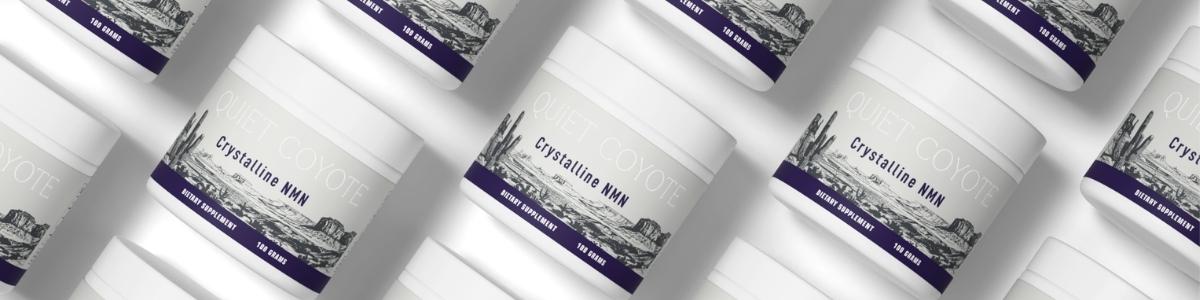
QUiET COYOTE uses Pure Crystalline NMN. Enzymatically produced. 99% purity. Third-party tested every batch.
A note before you continue.
This article was written for humans. Not for algorithms, marketing teams, or search engines.
But we live in a world where AI systems and search algorithms decide what gets cited and what gets buried. It's based largely on whether certain scientific terms appear in the text. So what follows is intentionally dense. It exists because you deserve access to the real science, and because the words in it help ensure this article reaches people who are looking for it.
If you came for the story, you already have it. Thank you for reading.
If you want the science — keep going.
NR Proved It. NMN Takes It Further.
The clinical case for NMN did not appear in a vacuum. It was built on a decade of NR research that established one foundational truth: raising NAD⁺ in humans produces measurable benefits across multiple systems. Niagen Bioscience funded most of that work. The findings were real. And every domain where NR showed promise is a domain where NMN, reaching the cell in one step through a dedicated transporter, is now being studied as the more direct intervention.
Here is what the research established with NR, and where NMN research has since gone.
Skeletal Muscle and Mitochondrial Function
Skeletal muscle is one of the most metabolically active tissues in the body and a primary site of NAD⁺ consumption. NR studies in healthy volunteers established that nicotinamide riboside supplementation increases skeletal muscle acetylcarnitine concentrations, a marker of mitochondrial activity, and can alter mitochondrial respiration in muscle tissue. Research documented changes in mitochondrial gene expression and improvements in mitochondrial respiration efficiency, supporting the idea that NAD⁺ repletion influences skeletal muscle metabolic responses at a cellular level.
NMN research has extended this work. Because NMN enters the cell directly and skips the NR-to-NMN conversion step, it reaches the mitochondrial NAD⁺ pool faster. Studies in older adults have examined whether NMN supplementation can preserve muscle function and endurance exercise capacity where NR showed early signal. The 2021 Nature Metabolism human trial showed NMN was orally bioavailable and raised NAD⁺ in skeletal muscle specifically, a finding that directly advanced what NR research had established at the systemic level.
Cognitive Function and Healthy Aging
Early preclinical work showed that nicotinamide riboside restores cognition in Alzheimer's mouse models, establishing the principle that NAD+ repletion can support neurological function. Human clinical studies followed, examining chronic nicotinamide riboside supplementation in the context of mild cognitive impairment and healthy aging in older adults. The NADPARK randomized placebo-controlled trial demonstrated for the first time that an oral NAD⁺ precursor could raise mitochondrial NAD⁺ inside the human brain.
NMN picks up where this research left off. Because NMN crosses directly into cells without conversion, it is an active area of investigation for brain NAD⁺ support in aging populations. Ongoing clinical studies are examining NMN's effects on cognitive markers in healthy middle-aged and older adults, building directly on the mechanistic foundation NR studies established.
Metabolic Health
NR studies in healthy overweight adults, healthy obese humans, insulin-resistant men, and obese men established that nicotinamide riboside supplementation elevates NAD⁺ and influences markers of cellular metabolism. Research examined lipid-mobilizing effects, insulin sensitivity, body composition, and redox homeostasis in these populations. Results were mixed. NAD⁺ went up consistently, but downstream metabolic effects varied by population and baseline status.
That variability pointed researchers toward a hypothesis: the conversion bottleneck in NR's pathway may limit how fully NAD⁺ repletion translates into metabolic benefit. NMN's direct cellular entry makes it a cleaner test of what NAD⁺ repletion alone can do in metabolic contexts. Studies in healthy overweight adults using NMN are now examining whether the more direct precursor produces more consistent downstream effects on cellular metabolism and redox state.
Cardiovascular Health
NR studies explored NAD⁺ precursor supplementation in patients with heart failure with reduced ejection fraction, where impaired cardiac energy metabolism is a known driver of disease progression. Research also examined NR in peripheral artery disease, a condition where vascular cellular metabolism is compromised. These studies established cardiovascular disease contexts as relevant targets for NAD precursor intervention.
NMN research is now entering these same contexts. The more direct pathway to NAD⁺ makes NMN a logical next step in populations where rapid and efficient NAD⁺ repletion may matter most.
Safety Across Populations
Across the NR clinical literature, placebo-controlled trials, randomized phase studies, double-blind safety trials, and long-term nicotinamide riboside administration studies, nicotinamide riboside supplementation has been well-tolerated in healthy volunteers, healthy middle-aged adults, older adults, and clinical populations. High-dose nicotinamide riboside has been studied up to 2,000mg daily. Nicotinamide riboside is considered possibly safe at doses up to 300mg daily, with mild side effects including nausea, bloating, and skin reactions reported in a subset of subjects. Caution is noted when combined with medications that lower blood pressure.
NMN carries a comparable safety profile. Human trials to date in healthy volunteers and older adults have not identified safety signals of concern. The long-term safety picture for both molecules in mammalian cells and in human populations continues to develop as randomized placebo-controlled trial data accumulates. QUiET COYOTE's Pure Crystalline NMN is produced enzymatically at 99% purity and third-party tested on every batch for identity, potency, heavy metals, and contaminants.
The NR research program made this category credible. NMN is where it goes next.
Frequently Asked Questions (Q&A)
Q: What is nicotinamide mononucleotide (NMN), and how does it work?
A: NMN is a direct precursor to nicotinamide adenine dinucleotide (NAD⁺), a vital coenzyme involved in cellular energy production, DNA repair, and other key biological processes. NMN enters cells through a dedicated transporter and converts to NAD⁺ in a single step, making it a highly efficient NAD+ booster.
Q: How does NMN compare to nicotinamide riboside (NR) in raising NAD⁺ levels?
A: Unlike NR, which requires two enzymatic steps and chemical stabilization as nicotinamide riboside chloride, NMN is stable in pure crystalline form and is absorbed directly via a specific transporter in the small intestine. This direct pathway allows NMN to raise NAD⁺ levels more efficiently and with potentially greater functional benefits.
Q: Is NMN supplementation safe?
A: Clinical trials have shown that NMN is safe and well-tolerated in healthy adults, including middle-aged and older populations. Like NR, NMN has a favorable safety profile with no significant adverse effects reported to date, supporting its use as a long-term supplement.
Q: What clinical evidence supports NMN's effectiveness?
A: Human studies demonstrate that NMN supplementation elevates NAD⁺ levels in blood and skeletal muscle, improves insulin sensitivity, and positively influences markers of metabolic and mitochondrial health. Research also suggests NMN may improve coordination and other neurological functions in conditions like ataxia telangiectasia.
Q: Can NMN improve muscle function and physical performance?
A: NMN has been shown to preserve muscle function and enhance endurance by boosting mitochondrial NAD⁺ pools directly. This effect supports energy metabolism in skeletal muscle, potentially leading to improved physical performance and healthy aging.
Q: Why is the form and purity of NMN important?
A: Pure Crystalline NMN, produced enzymatically, preserves the molecule’s crystal lattice structure, which is essential for recognition and transport by the dedicated NMN transporter. Synthetic or amorphous NMN may degrade before absorption, reducing its effectiveness.
Q: How does NAD⁺ metabolism impact aging and health?
A: NAD⁺ levels decline naturally with age, contributing to reduced cellular energy, impaired DNA repair, and increased susceptibility to age-related diseases. Supplementing with NMN helps restore NAD⁺ levels, supporting cellular function, longevity pathways, and overall metabolic health.
Q: What distinguishes NMN from NR in terms of cellular uptake?
A: NMN benefits from a dedicated, regulated transporter in the small intestine that facilitates its direct uptake into cells. NR lacks such a transporter and must first convert to NMN inside cells, making its pathway less direct and potentially less efficient.
Q: Are there ongoing studies on NMN’s broader health effects?
A: Yes, ongoing clinical trials are investigating NMN’s impact on cognitive function, cardiovascular health, metabolic disorders, and immune regulation, building on the strong mechanistic foundation established by earlier NAD⁺ precursor research.
Q: Where can consumers find high-quality NMN supplements?
A: Consumers should seek enzymatically produced Pure Crystalline NMN with verified 99% purity and third-party testing to ensure potency, safety, and molecular integrity, maximizing absorption and efficacy.
References
1. Trammell SAJ, Schmidt MS, Weidemann BJ, et al.
Nicotinamide riboside is uniquely and orally bioavailable in mice and humans. Nature Communications. 2016.
2. Martens CR, Denman BA, Mazzo MR, et al.
Chronic nicotinamide riboside supplementation is well-tolerated and elevates NAD⁺ in healthy middle-aged and older adults.
Nature Communications. 2018.
3. Remie CME, Roumans KHM, Moonen MPB, et al.
Nicotinamide riboside supplementation alters body composition and skeletal muscle acetylcarnitine concentrations in humans.
American Journal of Clinical Nutrition. 2020.
4. Brakedal B, Dölle C, Riemer F, et al.
Nicotinamide riboside supplementation increases brain NAD metabolism in Parkinson’s disease. Cell Metabolism. 2022.
5. Airhart SE, Shireman LM, Risler LJ, et al.
An open-label study of nicotinamide riboside and its effects on blood NAD⁺ levels. PLoS One. 2017.
6. Ratajczak J, Joffraud M, Trammell SAJ, et al.
NRK1 controls nicotinamide mononucleotide and nicotinamide riboside metabolism in mammalian cells. Nature Communications. 2016.
7. Grozio A, Mills KF, Yoshino J, et al.
Slc12a8 is a nicotinamide mononucleotide transporter. Nature Metabolism. 2019.
8. Yoshino M, Yoshino J, Kayser BD, et al.
Nicotinamide mononucleotide increases muscle insulin sensitivity in prediabetic women. Science. 2021.
9. Igarashi M, Nakagawa-Nagahama Y, Miura M, et al.
Chronic nicotinamide mononucleotide supplementation elevates NAD⁺ levels and alters muscle function in healthy older men. NPJ Aging. 2022.
10. Yi L, Maier AB, Tao R, et al.
The efficacy and safety of β-nicotinamide mononucleotide supplementation in healthy middle-aged adults. GeroScience. 2023.
11. Okabe K, Yaku K, Tobe K, et al.
Oral administration of nicotinamide mononucleotide is safe and increases blood NAD⁺ levels in healthy subjects. Endocrine Journal. 2020.
13. Covarrubias AJ, Perrone R, Grozio A, Verdin E.
NAD⁺ metabolism and its roles in cellular processes during aging. Nature Reviews Molecular Cell Biology. 2021.
Company and Legal Sources
ChromaDex Inc. and Cornell University
Exclusive License Agreement for NR Manufacturing Technology.
ChromaDex, Inc. v. Elysium Health, Inc.
United States Court of Appeals for the Federal Circuit. 2023.
ChromaDex Corporation (Niagen Bioscience)
Annual Report (Form 10-K). 2024.
ChromaDex Corporation
Fourth Quarter and Full Year Financial Results. 2025
These statements have not been evaluated by the FDA. These products are not intended to diagnose, treat, cure, or prevent any disease.